

When the author William Arthur Ward wrote, “The pessimist complains about the wind; the optimist expects it to change; the realist adjusts the sails,” he easily could have been referring to bass anglers. Honestly? Most of us fall into the pessimist category, while Bassmaster Elite Series pros are optimists and realists. We complain about it, and they adjust and make it work to their advantage. There’s no question that the wind often deals anglers a double-edged sword. A heavy wind makes maneuvering and casting difficult, but the fish often bite better. Conversely, a mirror-like lake is more comfortable to fish, but it also can cause a severe case of bass lockjaw.
“You’re going to have to deal with the wind no matter what it does, so you might as well look for how you can use it to your advantage,” said Texas pro Keith Combs. But there’s an art to that. You can’t simply say, “I’m going to go over here and fish the windiest banks I can find” and expect to catch fish, added Elite Series pro Gerald Swindle. “Everyone says ‘the wind is your friend,’ and in a lot of cases, it is,” he said. “But to make it your friend, you have to realize that it controls the environment of a lake and that in itself affects what fish do. Take note of that and use it to your advantage.”
Most anglers know that windy weather can enhance the bite on a clear lake, but it also creates issues on a shallow, mud-bottom lake. “On clear lakes, it generates current and diffuses light penetration,” explained Michigan’s Kevin VanDam. “That can really help position the fish to the angler’s advantage and make them more aggressive.”
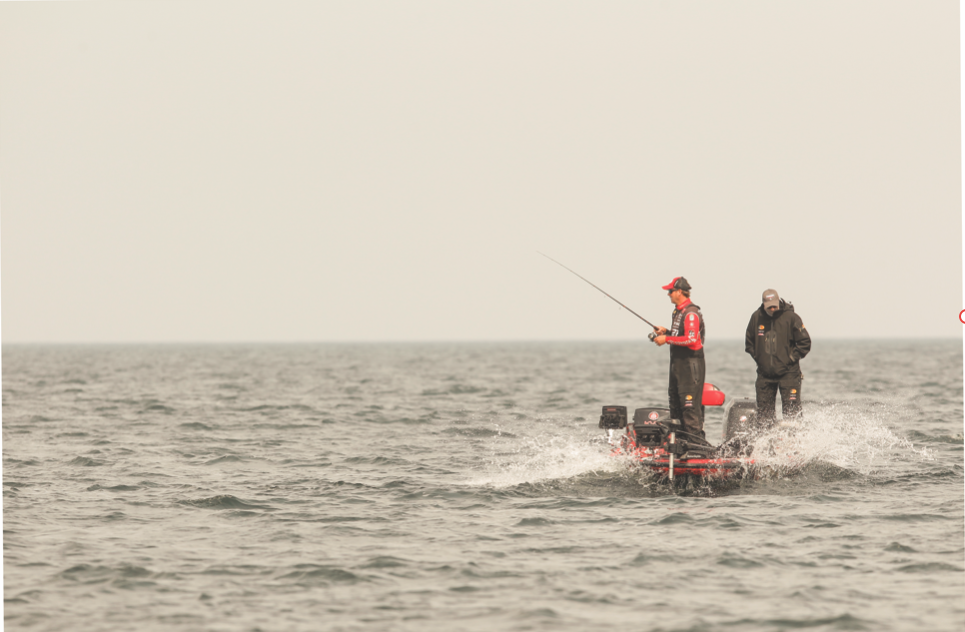
Bass are in tune with their environment, he added, and they use any natural advantages that help them feed more actively. That’s because the wind impacts the entire ecosystem. Waves stir up the plankton, pushing it from one side of the lake to another. Drifting plankton creates buffets for baitfish; hence, they follow the plankton plumes the same way bass follow the bait. When the plankton and bait pile up and the wave action breaks up the surface, bass seize the moment.
“One of the biggest misconceptions you hear anglers say is that the wind blows baitfish into the bank,” noted VanDam. “That’s baloney; baitfish are capable of fighting that current, but they do drift with the currents and feed on that plankton.” Fast-moving lures are a good first choice because the bass in wind are in a chasing mood. Crankbaits, spinnerbaits, jerkbaits and swim jigs should trigger a lot of bites. However, the wind can be a detriment on shallower, flat-bottom lakes. It can stir up silt, muddy up an area and shut down fishing, even in those places known to hold fish.
That’s why it’s critical to pay attention to not only what the wind is doing at that moment, but the direction and volume it’s blown in recent days and any changes that might occur in the near future. Combs said that’s why anglers who fish tournaments should always be thinking about what changing wind conditions can do.
A few years ago, he made note of changes in wind direction during a tournament in Florida and it paid off. “I had an area that had always been productive for me, but it was getting blasted by the wind and really muddied up,” he recalled. “No one was catching them there during practice.” But the wind changed directions overnight and literally blew the mud away from the bank two days later. “It opened a whole new window of clear water,” Combs said. “I went in there and had the area to myself because everyone else assumed it was still muddy. Despite a lousy practice, I managed a 15th-place finish because I anticipated that might happen.”
Swindle offers a similar example of how wind can change the lake environment. “There may be a shallow cove off the main lake that doesn’t have grass, but a steady wind can blow chopped up grass and other debris in there from the other side of the lake,” he said. “That cove may have never produced a bass, but when that grass blows in there and creates a mat, it attracts the baitfish and it can become the best pocket on the lake.”
Wind conditions can affect how the fish are positioned on various structures, too. For example, on relatively clear lakes with clay bottoms, VanDam will run windy clay points, searching for “mudlines” caused by the washing wave action over the clay. The mudline occurs where the dirtier water abuts clean water.
“The bass will move off the bank to relate to that mudline, and you can really get on a good pattern when that’s happening,” he said. However, he cautions, a new wind that trashes a bank quickly can be counterproductive.
“It’s important to think about how long a wind has been blowing from one direction and how it might affect the environment in that area,” VanDam added.
“Generally speaking, if you have a change from one direction to another, and the waves are hammering a bank suddenly, it might not be as good as another area where the winds have been blowing into it for longer periods. Those are other factors to consider.”
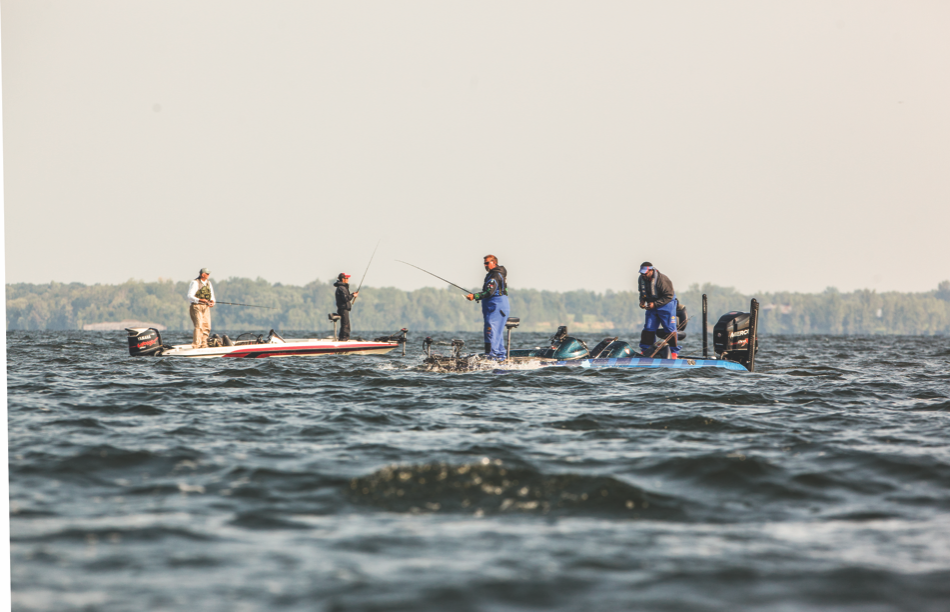
Low-light conditions come into play, as well. VanDam specifically targets the windy banks during early morning hours because the fish are generally up there feeding anyway, “and it emboldens the bite and it typically lasts longer.” Some could argue that wind direction has little impact on deep fish that are hugging the bottom. But that isn’t always the case, especially on clear lakes.
“It has a huge impact on the Great Lakes, where the wind and waves create a lot of current that you may not recognize,” said Elite pro Chad Pipkens of Michigan. “On Lake Erie, the lake level can drop a foot or two overnight with a change in wind direction and the fish will reposition on the structure.” Furthermore, he added, wind can create an undertow effect when the waves blast against an island or shoals and create a reverse subsurface current moving away from the bank. “The mix of waves and undertow sucks the bait around a lot, and that’s what gets the smallmouth moving around,” he said.
When there is a change in wind direction, Pipkens is apt to move around on a structure if the bite slows. “The bass don’t swim to the other side of the lake, but they might reposition themselves on the same structure, and you just have to relocate them,” Pipkens explained. Wind direction should also influence your casting angles, especially on shallow points and banks. The bass will be facing the wind because of the current it creates, so present your lures coming with the waves or across them. If the wind changes on a productive area and the action slows, reposition your boat so you can present lures appropriately. Also, remember that there are times when fishing windblown areas can be counterproductive.
For example, Swindle recalls the 2013 Grand Lake Classic, when the weather was brutally cold. He couldn’t get a bite in the wind, but when he switched to calmer areas, the fish bit better. “I moved to the calmer pockets where the water temperature hadn’t dropped as dramatically,” he said. “So you need to understand that there are times when the wind can hurt you.” VanDam says he seeks out calmer water during sunny spring and fall days when the baitfish — and sometimes the bass — want to be near the warming surface water. “That’s where you have to choose lures that work the upper water column, like wacky rigs, unweighted stickworms or maybe topwaters and jerkbaits,” he said. “Just remember, the fish can be real skittish, so you have to stay back and make quiet casts.”
On slick days when fishing deep, clear water like the Great Lakes, added Pipkens, the fish will position on the sweet spot of the structure. “You have to really be precise with your casts,” he insisted. “Without wind, those fish won’t move far to hit a drop shot, but if I put it within a 2-foot radius of where they hunker down, they will.”


