
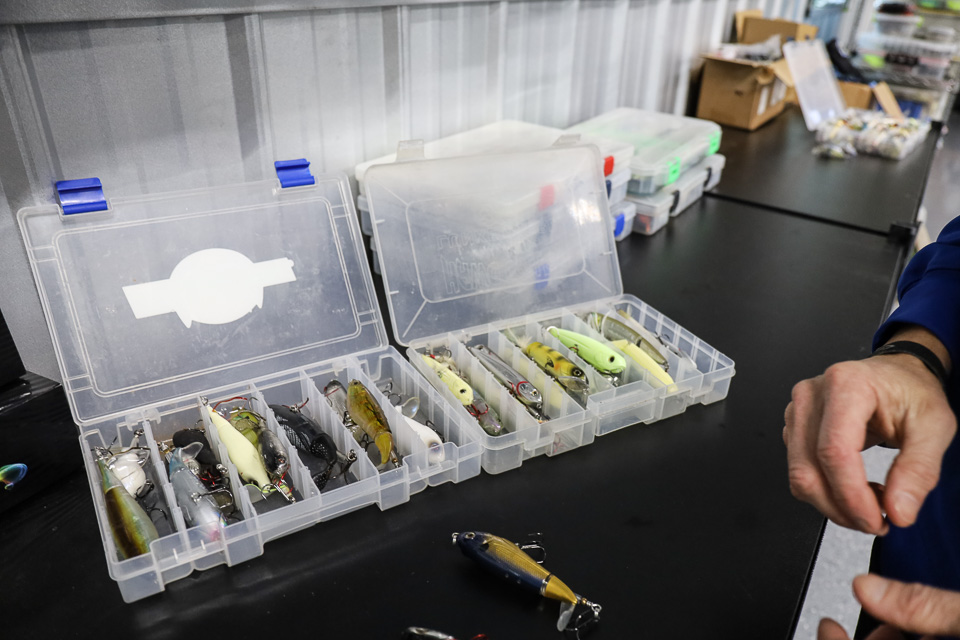
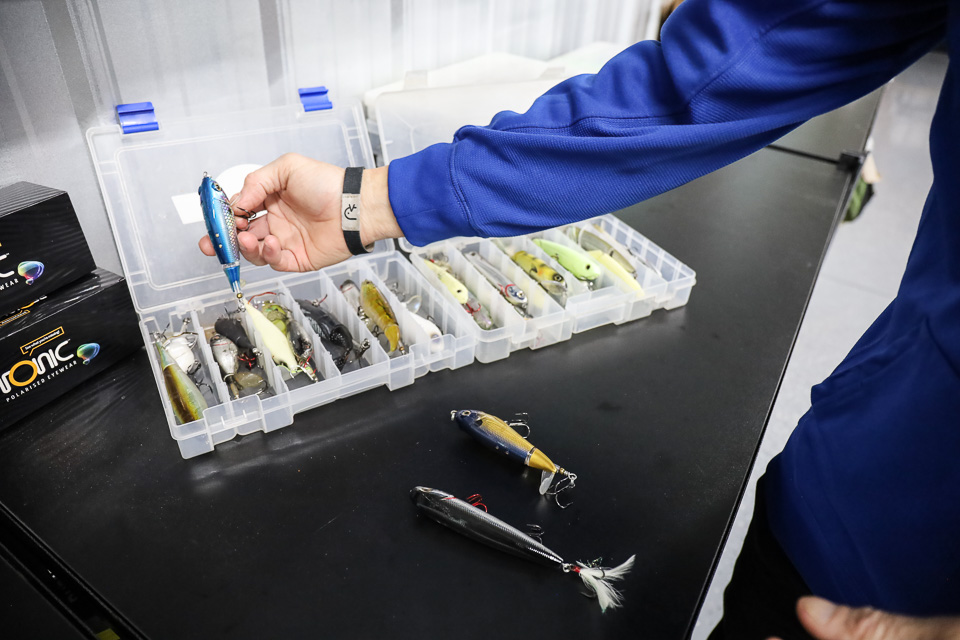
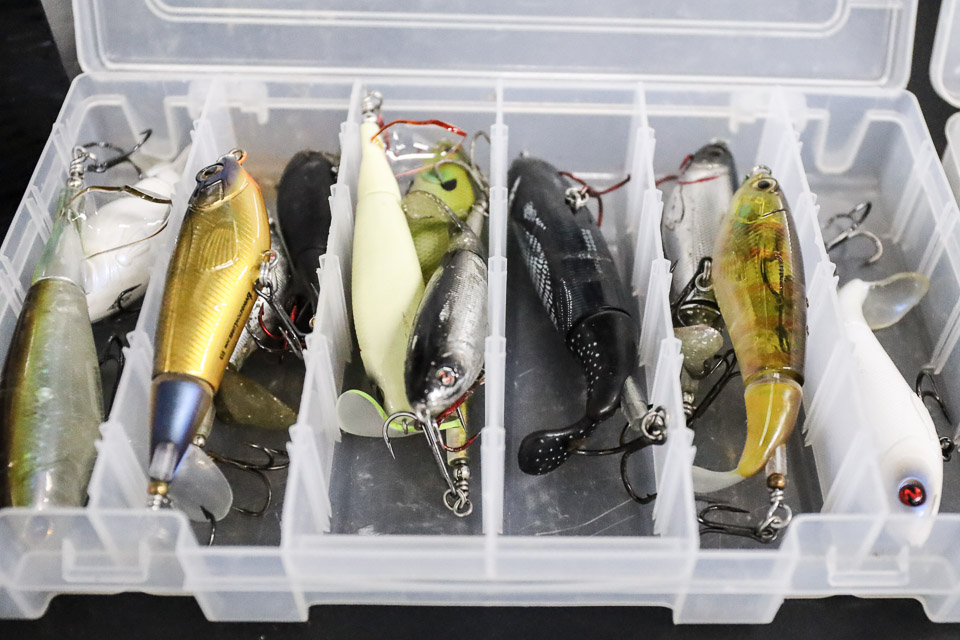
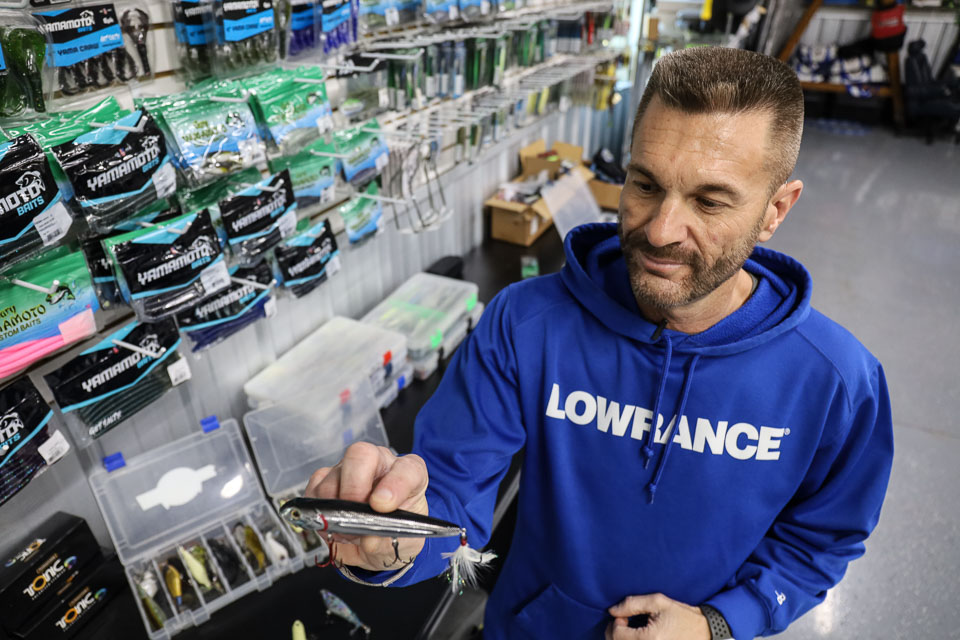
Randy Howell’s topwater tacklebox

The 2014 Bassmaster Classic champ helps anglers choose between walker and plopper style topwaters for the best success.

Shopping for topwater baits can be downright confusing given their various shapes, sizes and actions. Choosing between the sashaying action of a walker and the splashy display imparted by a plopper-style topwater is a prime example. Bassmaster Elite Series pro Randy Howell can help you decide which of these proven fish catchers is ideal for each of their respective applications. 
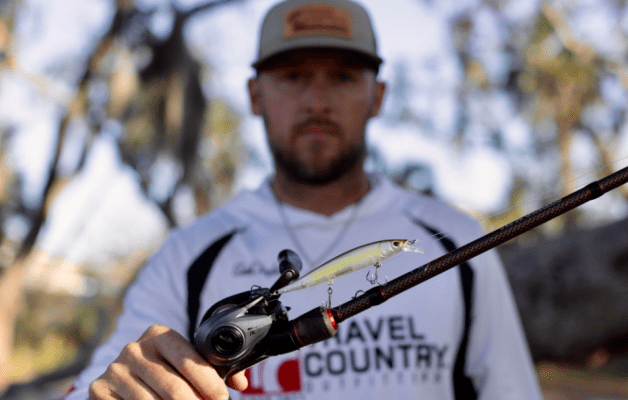
“Walking baits are the gold standard of topwaters — one of the originals with that classic walk-the-dog action,” Howell said. Walking-style topwaters feature weight transfer systems or weights that slide to the rear for long casts. On some walkers, the weight doubles to impart a loud rattle to call in bass from afar. They are ideal for covering open water when fished over shallow humps and schooling fish. “Open water bass feed looking up, making them perfect for any depth, or any time of day when fish are schooling,” Howell said. 
Ploppers have come on strong in recent years as the newcomer to the topwater lineup. “Ploppers are reaction-style topwaters and are an option similar to a buzzbait with their churning action,” Howell said. 
As opposed to the open-water walking bait, the target-oriented plopper is best suited for shoreline applications., laydowns, tree limbs or the outside edges of any shoreline cover. 
Howell uses a plopper as a change-up to the classic buzzbait. “You can slow the retrieve on the buzzbait, but you can also slow the presentation even more with the floating plopper,” Howell said. 
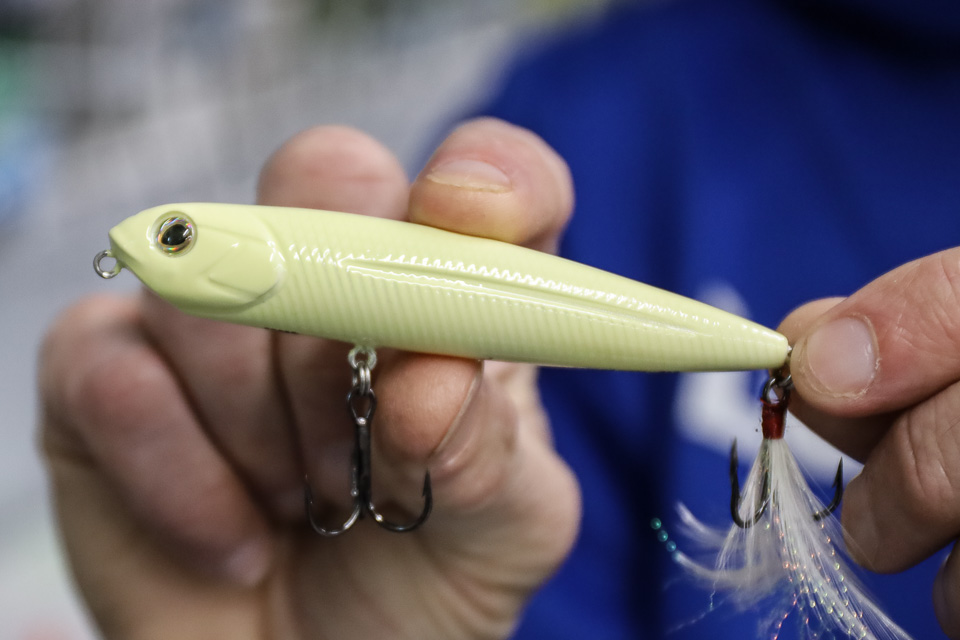
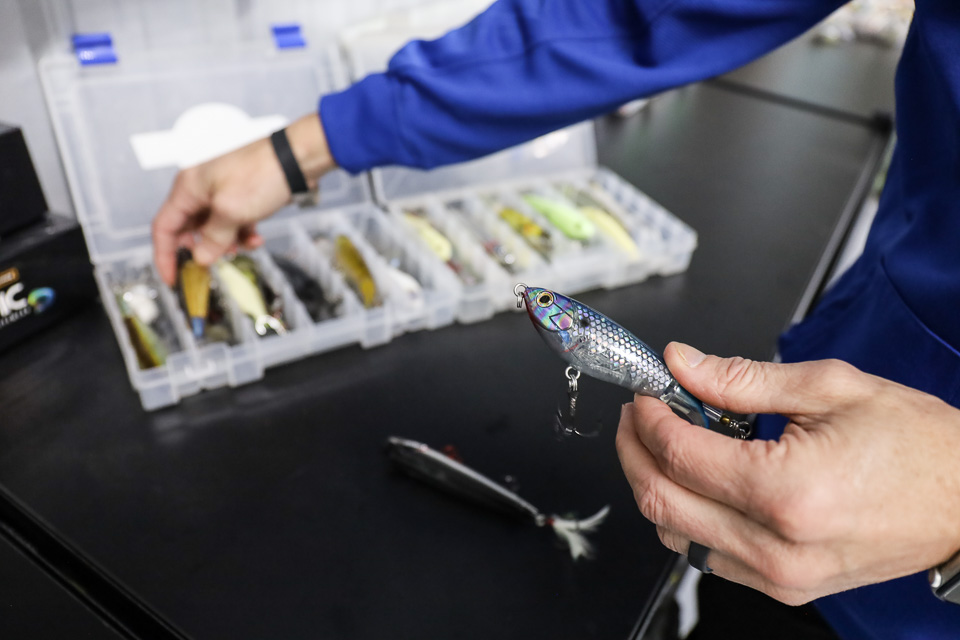
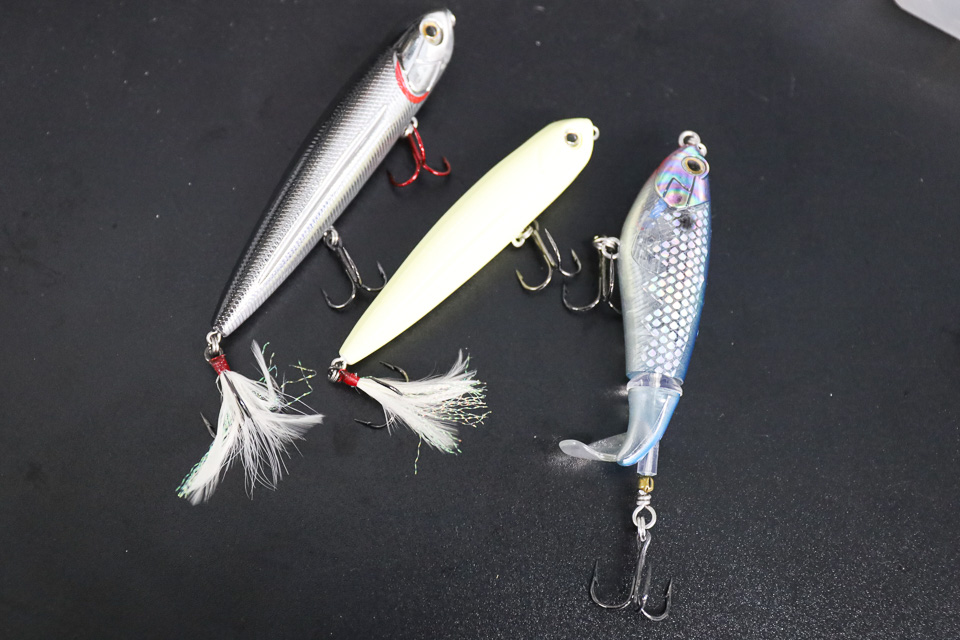
The Livingston Walking Boss (left), Walking Boss Jr. (middle) and Plopmaster are Howell’s go-to topwaters for the category. Each feature EBS (Electronic Baitfish Sounds) technology based on natural and instinctive feeding enticements of bass. The EBS Smart Chip emits realistic sounds specific to the bait type and color, including shad sounds favored for these baitfish imitators. 
Livingston Walking Boss
Weighing .75 ounces and 4.7 inches, the Walking Boss has the longest casting distance of the lineup. Howell favors this classic profile topwater for covering open water, when bass are suspended or when schools erupt in the distance. 
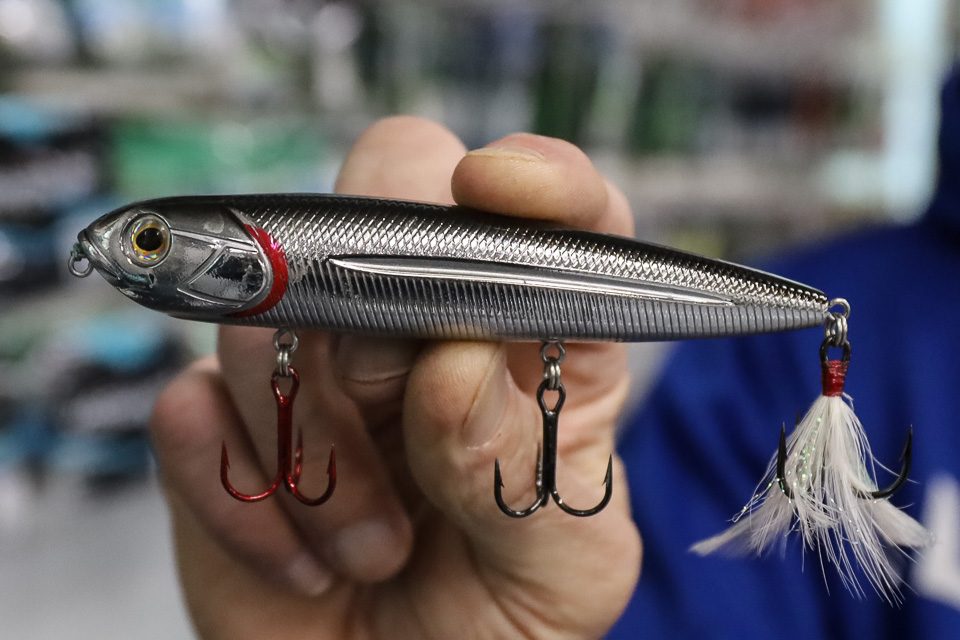
“The Smart Chip continues to transmit sound even when you pause and stop the lure,” Howell said. “If a bass strikes and misses the bait, which is common with a walker, they can hear that shad sound and come back to it.” The lure is most productive in open water when bass are feeding on roaming schools of baitfish, from late spring through fall. 
Livingston Walking Boss Jr. 
The Junior is ideal when a downsized version is needed to match the size of smaller baitfish. Howell keeps both sizes readily available to match the appetite mood of the bass. 
Livingston Plopmaster
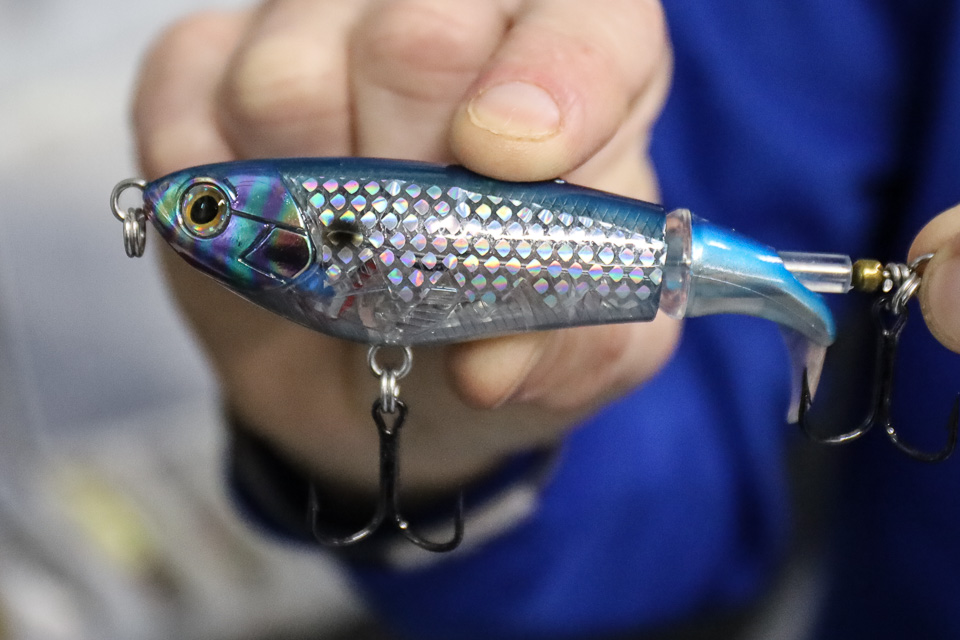
Howell’s use of the Plopmaster has two benefits. He gets a bait that can draw finicky bass out of shoreline cover, with an option when bass strike short or not at all on a buzzbait. “The treble hooks give you a better hookup percentage, and that unique plopping noise will bring them out of cover when nothing else will.” The Plopmaster gets the most use for Howell from spawn through summer, where he focuses on shady areas created by shoreline cover.