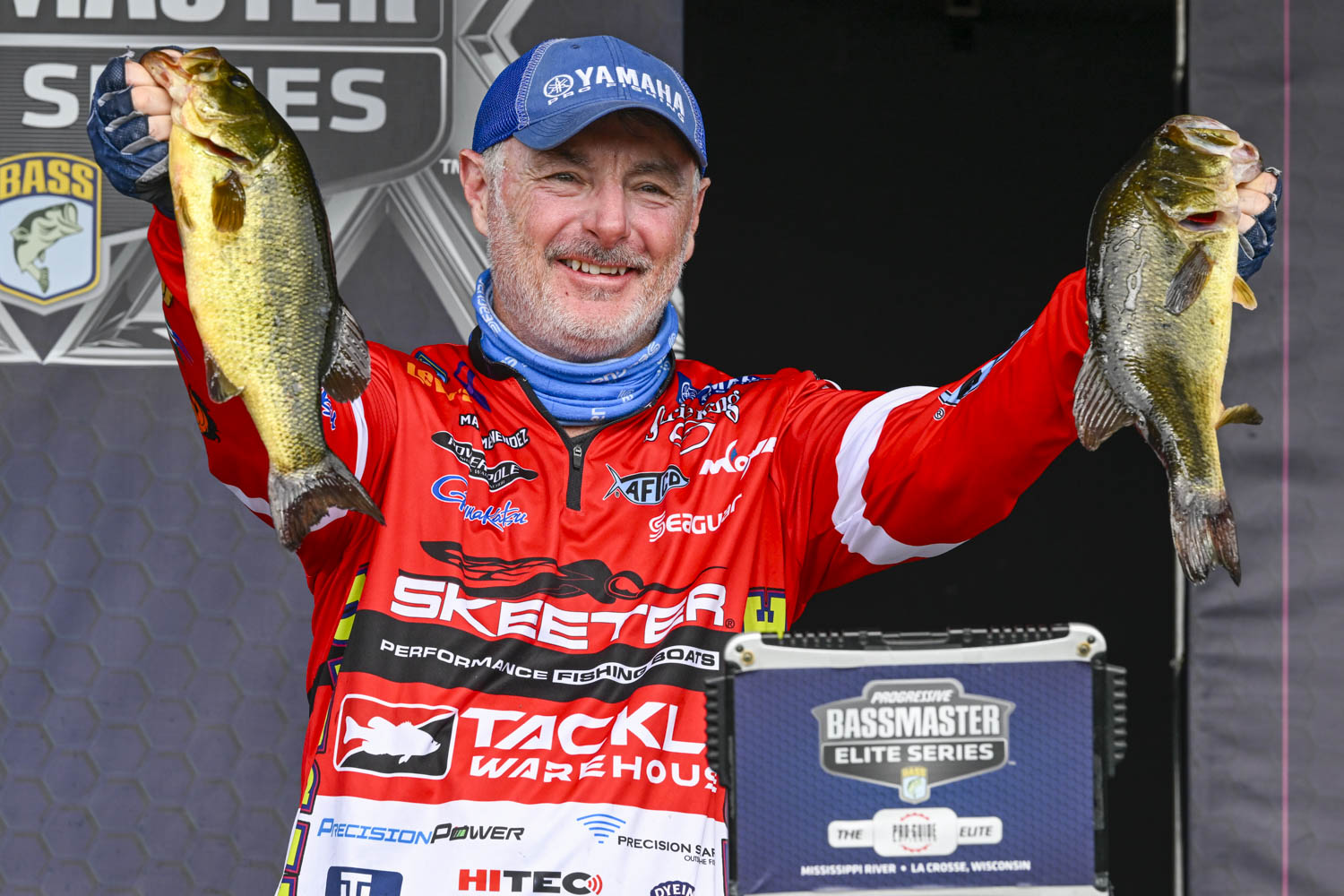
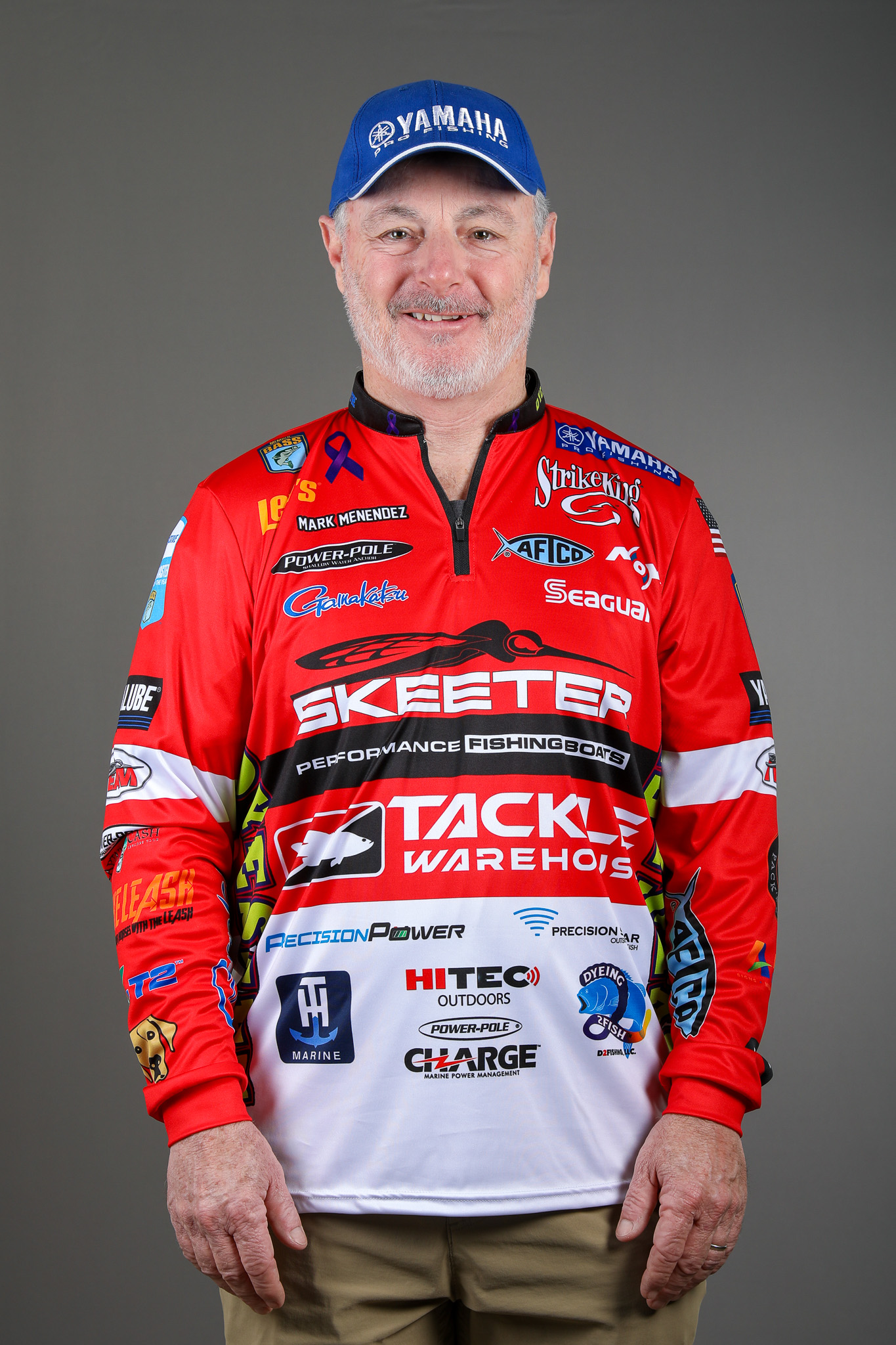
I’ve been very fortunate to be in this career for a long time.
I was always obsessed with fishing; I got into a club early and even chose to attend Murray State University in Kentucky because of its proximity to Kentucky Lake — my home lake. To be honest, I quite literally spent every free moment fishing my way through college on my way to my fisheries biology degree.
I fished my first Bassmaster tournament at the Illinois Invitational on the Illinois and Mississippi Rivers in 1991. Nearly 300 tournaments later, three wins, six Bassmaster Classic appearances and almost $1.5 million in career earnings, I can say that my only job has been that of a professional angler.
All of my career has been an amazing experience, but in 2006, with the start of the Elite Series, the intensity ramped up quite a bit. We had fished six events each season up to that point, and now we were going to be fishing 11. On top of that, the entry fees were going to be $5,000 a tournament.
It was all quite scary. We had to figure out a whole new way to prepare. Boat wraps were coming into play, and now we had “uniform requirements” that had to be a part of our jerseys, and the designs had to be approved by B.A.S.S. Like I said, it was an intense, scary time.
But, by the time we all got to Lake Amistad for the first event in 2006, it all started to take shape. We saw the vision of the series with the wraps and the jerseys, and the pomp and circumstance of everything from the meetings to the launch — it just felt different.
Then the fishing — oh my gosh, the fishing. I had 19 pounds, 6 ounces on the first day and ended up in 43rd place in the standings. I caught 23-3 on Day 2 and moved to 33rd place and another 20 pounds, 8 ounces on Day 3 to finish in 27th place with 63-1, cashing a check for $10,000.
When I saw Ish Monroe’s Day 3 weight of 34-1, everything just felt bigger and there was a feeling of excitement when we looked at what was ahead, with 10 more regular-season events and three “Majors” that we would have the chance to fish. Those Majors were huge because they were no-entry-fee events and the top prize was going to be $250,000; it was incredible.
Because of the Elite Series, we got to experience things that we had never thought we would in competition. Amistad was certainly one of those, but to be able to experience the California Delta and Clear Lake because of the schedule was amazing. We had all heard about those bodies of water, and we had heard about the unique fishing techniques that were used there, but to experience them firsthand was something I would have never imagined.
The Elite Series has always been a bridge between generations to me. I got to compete against some of the guys I’d looked up to and watch new generations of anglers aspire to compete on that level and then see them achieve their goals. The television exposure of the Elite Series and the expanded coverage it brought from independent media helped expose our sport in ways we hadn’t thought were possible.
I’ve seen things I’ll never forget, like Denny Brauer winning on the Arkansas River — fishing offshore. Yes, he was still fishing a jig, but the schedule made it so we all had to adapt and learn new things. The Elite Series brought us the opportunity to witness firsthand how different anglers attacked bodies of water, and I’ll always relish the fact I got to compete against guys like Aaron Martens and see his light-line approach up close and personal.
The Elite Series has always felt a step above since the beginning. I can look at my life and see the opportunity it has provided me to raise a family and to advance my career as an angler and a promoter. I have competed against the best on the biggest stages, and I am fortunate to say that I am the proud owner of one of those coveted “blue trophies” from Lake Dardanelle in 2009.
Overall, there is a true sense of pride that I feel to say that I have been an Elite Series angler for more than half of my career now, and I’m humbled to be a part of its history.