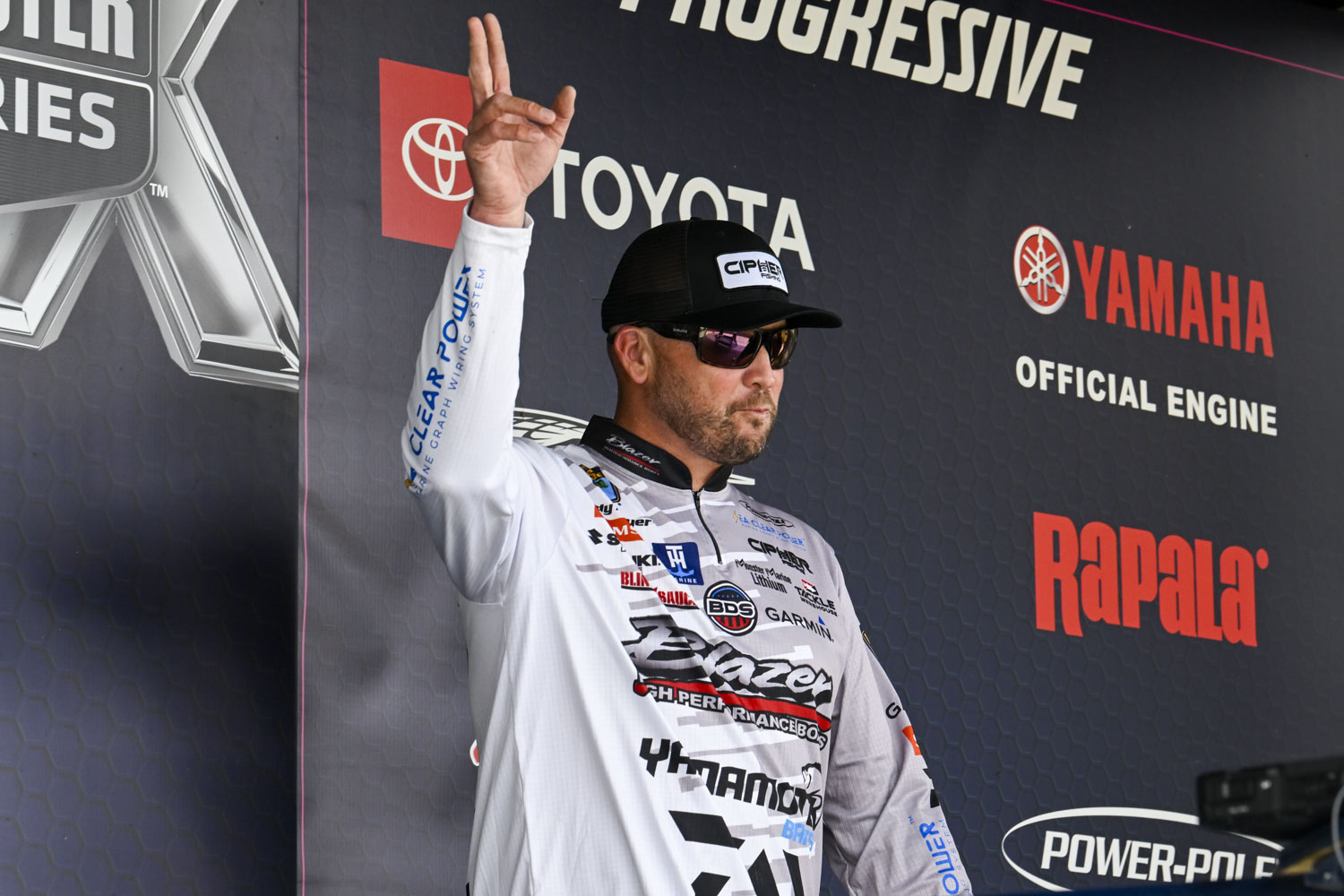

I finished 27th at Lake Hartwell, the fourth Bassmaster Elite Series tournament on this year’s schedule. That moved me up to 12th place in the Progressive Bassmaster Angler of the Year race and right on track for making the 2026 Bassmaster Classic.
Then I went to Texas and had my two worst tournaments of the season, finishing 71st at Lake Fork and 60th at the Sabine River. I dropped to 27th in the point standings. I’m still above the Classic cutline, but I’m in for a fight to make bass fishing’s biggest event.
The next tournament on Oklahoma’s Lake Tenkiller is likely to be a LiveScope event. I’ve never been there, but I’ve heard it has clear water, spotted bass, smallmouth bass and some largemouth.
Although I’ve been working to improve my ability to catch bass using LiveScope, the Lake Fork tournament taught me I have a lot to learn.
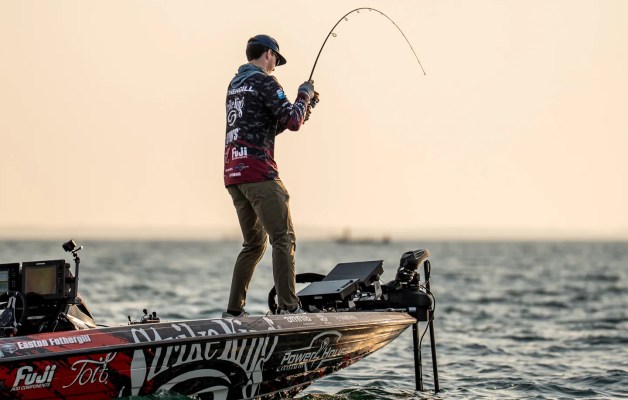
During that event, I invested a good bit of time scoping bass on points side-by-side with Paul Marks, Easton Fothergill, Tucker Smith and Kyoya Fujita. They’re some of the younger guys who excel with forward-facing sonar.
In two days of fishing that way, I caught one 4-pounder, while watching them land limits of monster largemouth. Tucker won the tournament, and the other three guys finished in the Top 10.
That experience made me realize how much more I need to learn about scoping to stay competitive. The bass have been so pressured by the many anglers who now employ forward-facing sonar that they’ve become much harder to catch. Gone are the days when you could get a bait anywhere near a suspended bass and it would bite.
I’ve become proficient enough with LiveScope that I can see the bass and consistently get a bait in front of them. Unfortunately for me, that’s just not good enough anymore. Now you’ve got to be absolutely precise about where you cast the bait and the way you bring it.
If you bring a bait from behind a bass and drop it on the fish, it will spook. You also need to know which way the bass is facing so you can retrieve your bait in a certain direction.
It’s almost like sight fishing during the spawn in that every bass is different. You have to find the sweet spot that makes a bass respond and nab your bait.
I also have to get better at distinguishing bass from other fish. Texas lakes, for example, have multitudes of carp, drum, catfish, crappie and stripers. The last thing I want to do is waste time casting to a trash fish, hoping it’s a bass.
Some anglers are so good at scoping they can not only discern bass from other species, they can also tell the size of the bass. If they need a 5-pounder to cull, they don’t waste time throwing at a 4-pounder.
After failing to make the Top 50 cut in either Elite event in Texas, I need to get better with LiveScope in a hurry. It will surely be a player at Tenkiller and at the following tournament on Lake St. Clair.
The only way to do that is to practice with it as much as I can. I have to turn LiveScope on, stare at that screen and try to learn what the more advanced scopers are seeing and doing.
I’ve fished several other bass tours and can tell you for certain that the most talented scopers compete on the Bassmaster Elite Series. If we’re going to be allowed to use this technology, I have to master it. If I don’t, time will pass me by.