Ahead of any tournament, any number of anglers will tell you how important a fast start is, whether they are discussing a bite window or filling out a limit for confidence’s sake.
This week at Lake Ray Roberts for the 2025 Bass Pro Shops Bassmaster Classic presented by Under Armour, a fast start means something very different. It could mean two bites in the two or three hours or just simply getting one big bite before 11 a.m.
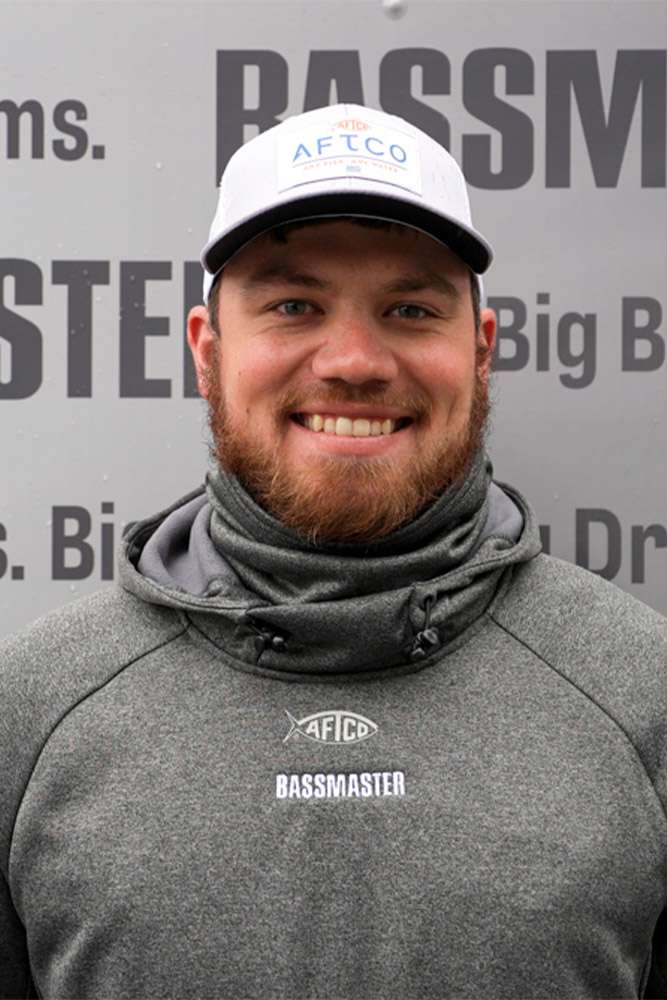
“A fast start is one bite before 8 a.m. for me,” Easton Fothergill remarked. “My goal really is to catch five every day, which today I did.”
Yes, there are bite windows, but bites are generally hard to come by this week at Ray Roberts so those bite windows are hard to distinguish. A lot of times, a prespawn bass will become more active later in the day, but it seems the bass in Ray Roberts just aren’t willing to bite.
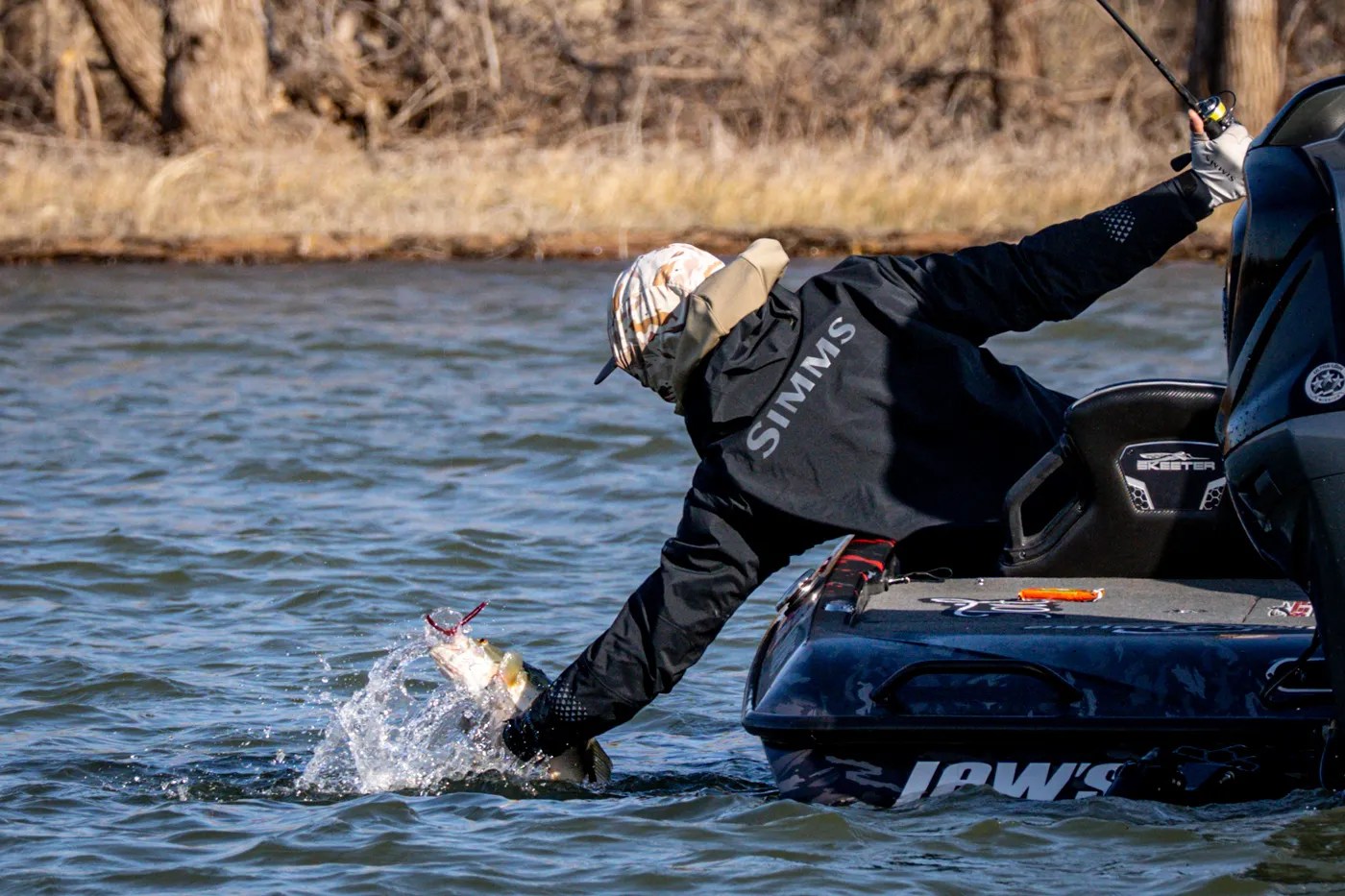
For that reason, John Garrett is treating this tournament like a winter event more than a prespawn event. He landed an 8-12 largemouth, the Phoenix Boats Big Bass of the Day, early in the morning. From there, he only landed two more bass the rest of the day totaling 16-13.
Meanwhile, third-place Jay Przekurat didn’t catch a keeper until 10 a.m., but collected enough bites to bring 23-7 to the scales. Fifth-place Lee Livesay landed a 3-pounder to start his morning, but suffered a long lull before his late day rally that gave him 23-0.
“This time of year, you never know. It depends on how you are fishing,” Livesay said. “It got cold last night. The water temperature dropped 8 degrees where I started. It was kind of muddy. But it doesn’t matter how you start, it is how you finish.”
Part of the slow start has a lot to do with how spread out the bass are. 2024 Classic champion Justin Hamner, who landed his first keeper bass around 9 a.m., has yet to catch multiple bass in one single spot and he caught largemouth anywhere between 1 and 20 feet of water.
“Somebody might be on it, but I haven’t seen it all week where you can pull up on one spot and catch multiple fish. You have to pick up one fish here and one fish there. They are so spread out. You have some in 30 feet of water versus catching others in a foot of water.”
There seems to be a general consensus that the bass in Ray Roberts are structure oriented. John Garrett, Hamner and Carl Jocumsen all mentioned that the bass are stuck to cover. Hamner said he had to cast at every target he saw to draw bass out of it.
While the production on BassTrakk picked up as the day progressed, many anglers said it wasn’t necessarily because the bite got better. Rather, anglers began to put the pieces of the puzzle together on what the bass were willing to eat and why.
Jocumsen had two bass until 12:30, but found bites later in the day to fill out his limit.
“It has more to do with what I’m doing,” Jocumsen said. “They are there. They are just very hard to catch. You have to make them bite. What is frustrating is, I’m on a big bait deal, and it is my best chance of winning. I need the water temperature to be around 58 degrees, and it went down to 55 degrees.”
Hamner continued to see the bass super tight to structure and cover elements throughout the day, but figured out which cover they would come out of to eat. His issue? Landing the bass that committed.
“Every day has been so different. You have to figure out which bass will actually cooperate,” Hamner said. “When one thing is going, I can’t get any of the other going. I fished a lot of shallow rock today, and they were there more than anywhere else. I couldn’t get those bass to cooperate today. When they want to bite, they are some of the most aggressive fish I’ve seen. But when they don’t you might as well eat a sandwich or something.”
Fothergill said he has a pretty clear understanding of what is happening on Ray Roberts right now. While the bass are still very structure oriented in his zones, they begin to rise and move some as the day time heat impacts the lake.
“Especially when it is sunny, they slide up in the water column,” Fothergill said. “It is about following them throughout the day. I don’t think the bite necessarily gets better. In the morning, they are on the bottom and pasted to the structure. But they start hovering around it by the afternoon. They get looser and looser to cover. One in five bass I get to bite.”
Three bass made the biggest difference in Przekurat’s day, one of which came right at the end of the day. The Wisconsin pro will be happy if he can land two bass over 3 pounds in the first couple hours of the day. The water temperatures in his area were back down to 53 degrees in his area in the morning, but he didn’t think the bite got better.
“I think you have to stumble on a catchable bass. I had a lot of bass that looked at my bait, but it’s luck of the draw. You only get so many opportunities. Some were smelling my bait and I was begging it to get one little hook.”
Livesay does believe his bite gets better as the day goes along, which could be a dangerous proposition for the rest of the field.
“The stuff I’m fishing is better later in the afternoon,” he said. “I do feel like it got better. I feel like I could have gone back to where I started and caught some really good fish for sure. It was better in the area I was in too. The bass aren’t leaving in the mornings, they just aren’t active.”